
This framework is developed by a team of former McKinsey and Big 4 consultants. The presentation follows the headline-body-bumper slide format used by global consulting firms.
Editor Summary
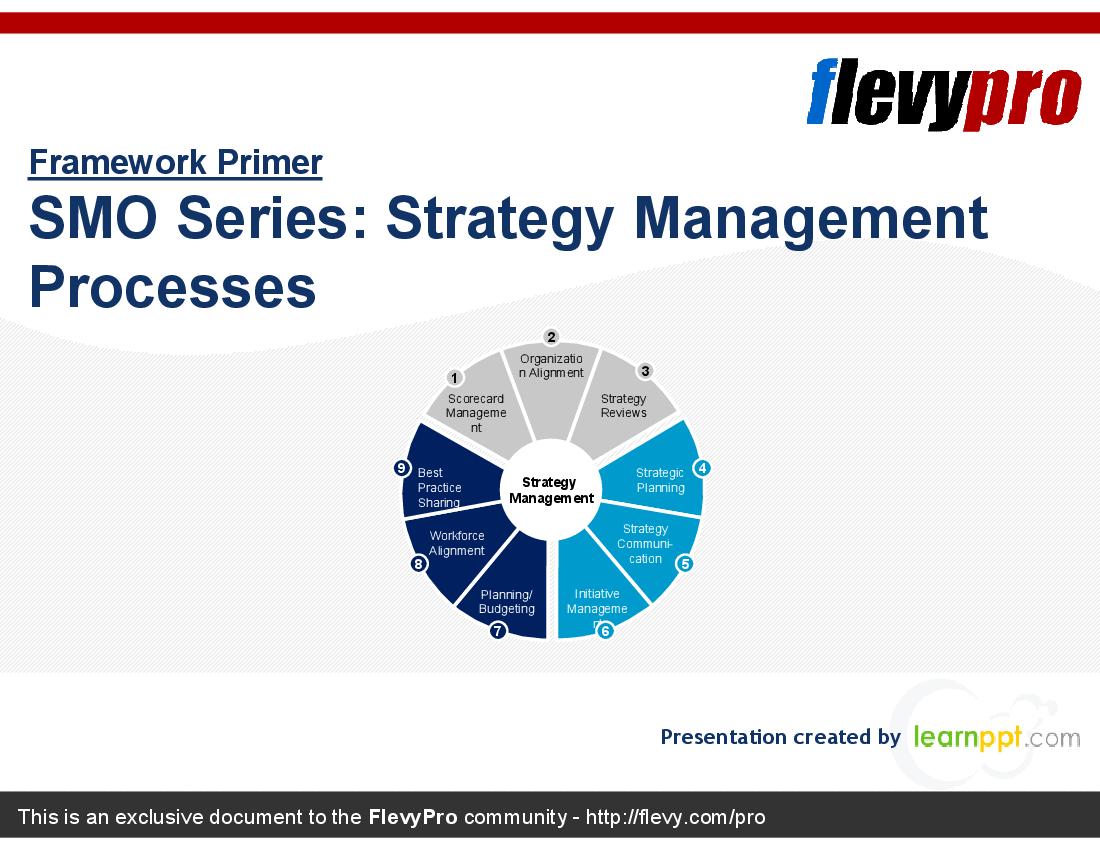
SMO Series: Strategy Management Processes is a 24-slide PowerPoint by LearnPPT Consulting that details nine cross-functional processes an SMO should run: Scorecard Management; Organization Alignment; Strategy Review; Strategic Planning; Strategy Communication; Initiative Management; Planning/Budgeting; Workforce Alignment; and Best Practice Sharing.
Read moreTarget users include Strategy Management Office leads, strategy executives, and business-unit line managers for operationalizing corporate strategy across units. Used for defining SMO process scope and governance. Sold as a digital download on Flevy with immediate access.
This presentation is designed for situations where an organization needs a central coordination function to improve strategy execution—examples include fragmented business-unit priorities, inconsistent scorecard use, or weak links between planning, budgeting, and initiatives.
SMO leads establishing or refining cross-functional processes such as scorecard management and strategy review cadence.
Strategy executives aligning business-unit goals to corporate strategy through organization alignment and scorecard management.
Business-unit leaders coordinating initiatives and preparing for SMO-led strategy reviews via initiative management.
HR/workforce planners mapping talent priorities to strategic objectives using the workforce alignment process.
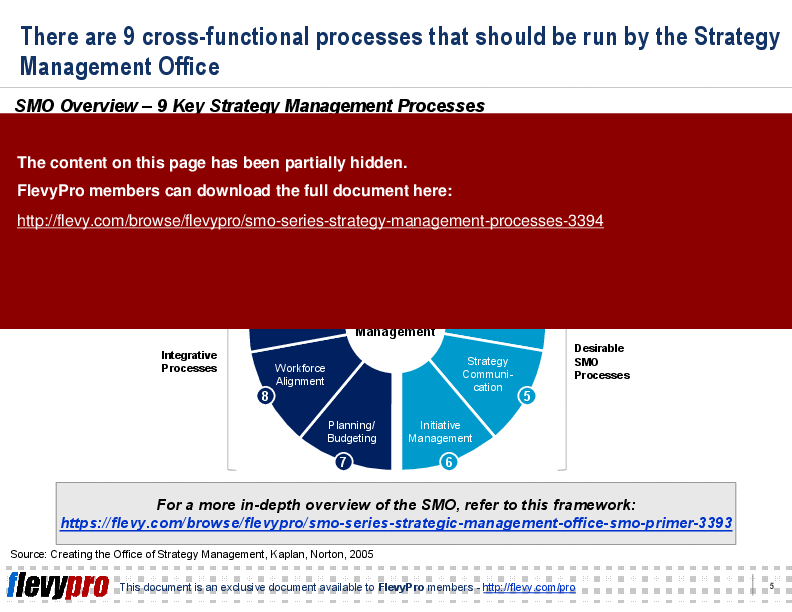
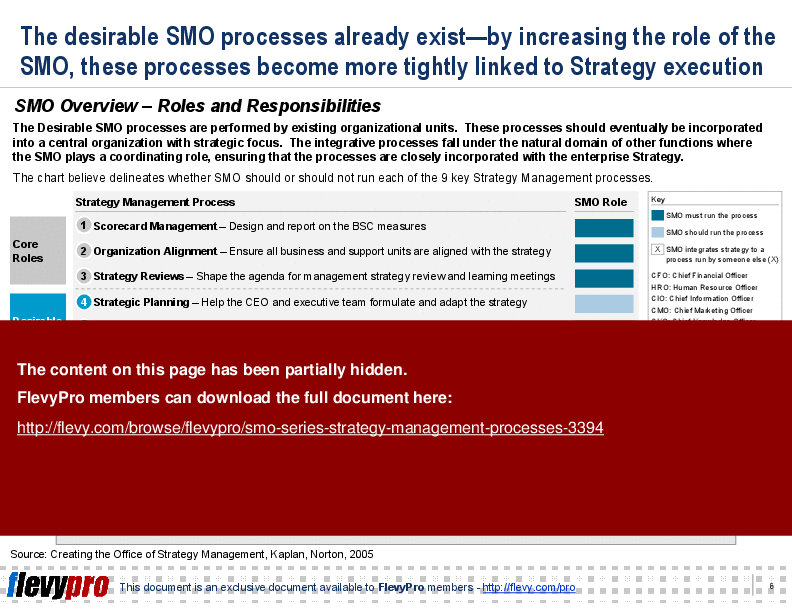
The three-part categorization into core, desirable, and integrative processes reflects consulting practice that separates governance, planning, and resource-alignment activities.
The Strategy Management Office (SMO), also referred sometimes as the Office of Strategy Management (OSM), is the team responsible for managing the Corporate Strategy of the organization.
The ultimate role to execute Strategy lies with the line managers and employees, but without a core command and coordination office (i.e. the SMO), Strategy is either skipped from key processes or the processes are ineffectual across business units, causing poor Strategy execution.
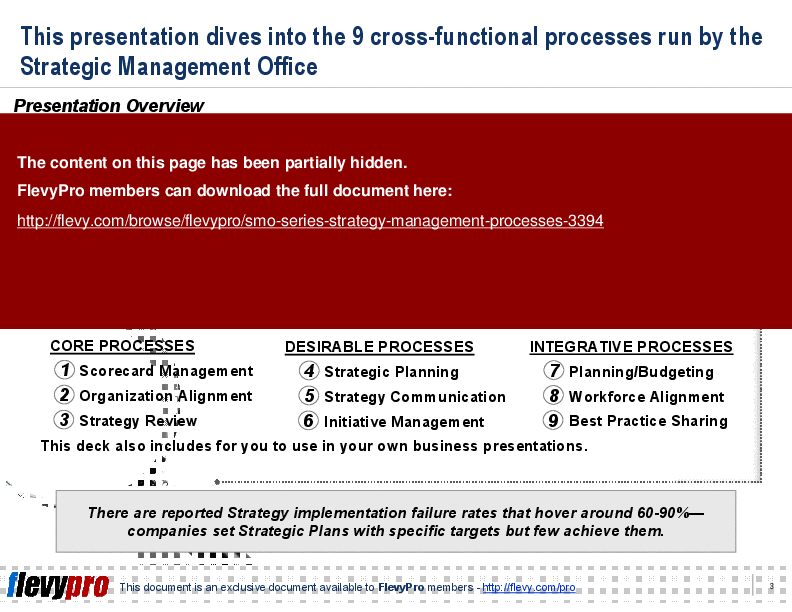
This presentation is the second in a series of 3. It dives deep into the 9 cross-functional processes that should be run by the Strategy Management Office. These are split into 3 categories:
>> INTEGRATIVE PROCESSES
7. Planning/Budgeting
8. Workforce Alignment
9. Best Practice Sharing
This deck also includes for you to use in your own business presentations.
The SMO Series: Strategy Management Processes presentation is an essential tool for executives aiming to streamline their strategy execution. This PPT provides a detailed breakdown of the nine key processes that are critical for effective strategy management. Each process is categorized into core, desirable, and integrative, offering a comprehensive framework for aligning organizational efforts with strategic goals.
The presentation emphasizes the importance of scorecard management, organizational alignment, and strategy reviews as core processes. These are fundamental to maintaining strategic focus and ensuring that all business units are aligned with the overarching corporate strategy. The document also highlights the role of strategic planning, communication, and initiative management as desirable processes that enhance the strategic capabilities of the organization.
Integrative processes such as planning and budgeting, workforce alignment, and best practice sharing are also covered in-depth. These processes ensure that strategic initiatives are supported by robust planning and resource allocation, fostering a culture of continuous improvement and alignment across the organization. This presentation is a valuable resource for any executive looking to enhance their organization's strategic management capabilities.
What are the core processes a Strategy Management Office should manage?
An SMO should manage 3 core processes focused on governance and performance: Scorecard Management, Organization Alignment, and Strategy Review. These processes establish strategic focus, align business-unit objectives to corporate strategy, and create regular oversight mechanisms, constituting the 3 core processes.
How does an SMO differ from line managers in executing strategy?
The SMO provides command and coordination by running cross-functional processes and governance (e.g., scorecards and strategy reviews), while line managers and employees are responsible for day-to-day execution of initiatives and targets. The SMO’s role is defined across nine cross-functional processes.
What role does scorecard management play in strategy execution?
Scorecard Management is a core SMO process that maintains strategic focus and ensures business-unit performance is measured against corporate objectives, enabling consistent reporting and alignment across units. Scorecard Management is one of the 3 core processes.
What should I look for in an SMO process toolkit if I need to set up governance quickly?
Look for a resource that explicitly covers the core governance processes (scorecard management, organization alignment, strategy review) plus integration points to planning, budgeting, and workforce alignment. Flevy’s SMO Series: Strategy Management Processes addresses all nine cross-functional processes in a 24-slide PowerPoint.
How can I evaluate whether a presentation or toolkit covers all SMO responsibilities?
Check whether it documents a full set of cross-functional processes across governance, planning/communication, and integration areas—specifically the nine processes grouped as core, desirable, and integrative. The SMO Series: Strategy Management Processes maps these nine processes.
After a merger, which SMO processes should we prioritize first?
Post-merger priorities typically include re-establishing governance and alignment: implement Scorecard Management to unify metrics, run Organization Alignment to map structures and roles, and hold Strategy Reviews to monitor integration—these constitute the 3 core processes.
If my organization struggles to link budgeting to strategy, which SMO process should I examine?
Examine the Planning/Budgeting process, which is one of the integrative SMO processes designed to connect financial planning and resource allocation to strategic priorities. Planning/Budgeting is listed as one of the nine SMO processes.
What are the desirable processes that enhance an SMO’s capabilities beyond governance?
Desirable processes that extend SMO capability include Strategic Planning, Strategy Communication, and Initiative Management; these support translating strategy into actionable initiatives and stakeholder engagement. There are 3 desirable processes.
The Strategic Management Office (SMO) plays a critical role in the Scorecard Management process, owning the organizational Balanced Scorecard (BSC). The SMO leads discussions on changes to BSC measures, influencing strategic decision-making. After yearly objectives are approved, the SMO coaches the executive team on strategic initiatives to achieve performance targets, facilitating organizational alignment. Training sessions on the BSC management system position the SMO as a resource for local project leaders. The SMO appoints metric owners and data collection personnel to ensure data reporting aligns with organizational goals. Additionally, the SMO selects BSC software for data extraction and standardizes terminology and measurement definitions for consistent reporting. Maintaining the integrity of reported BSC data is essential, particularly to mitigate biases from operating managers.
This PPT slide highlights the role of the Strategy Management Office (SMO) in communicating the Balanced Scorecard (BSC) and strategic objectives within organizations. The SMO coordinates strategy communication efforts, ensuring clear and consistent messaging, especially when corporate communications have limited focus on strategy. It integrates BSC training and education into employee development initiatives to reinforce strategic messages. Direct communication of strategic information from the CEO enhances message credibility and alignment across the organization. The SMO is critical in facilitating this process, ensuring effective delivery and understanding of the CEO's message throughout the company.
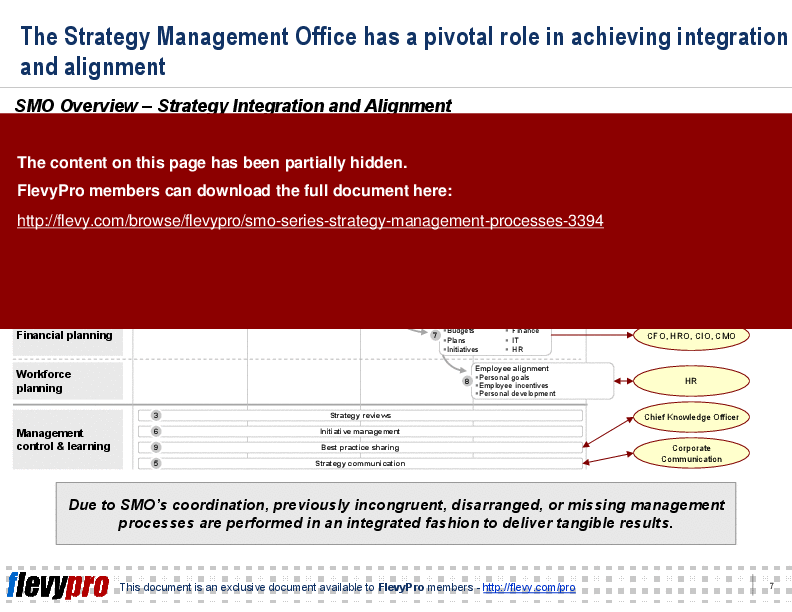
The Strategy Management Office (SMO) plays a critical role in aligning management processes with organizational strategy. The structured annual cycle consists of 4 quarters:
In Q1, the focus is on reviewing and updating the corporate strategy and vision. Q2 emphasizes alignment between corporate and business units, ensuring support units are synchronized with the broader strategy. Q3 involves developing business and support unit scorecards for performance measurement and accountability. Q4 centers on planning and budgeting, allocating financial resources based on strategic priorities and addressing employee alignment with personal goals and development.
The SMO coordinates efforts across functions such as finance, HR, and corporate communication, leading to an integrated approach that drives tangible results.
The Strategic Management Office (SMO) plays a pivotal role in aligning planning and budgeting processes with organizational strategic objectives. It integrates finance, human resources, and IT to ensure operational plans support broader goals. The SMO collaborates with finance to align budget targets with strategic initiatives, ensuring effective allocation of financial resources. It coordinates with human resources to align staffing and development initiatives with the skills required for executing strategic plans, emphasizing the importance of human capital. Additionally, the SMO assists IT in identifying systems and tools that enhance strategic goal achievement. Marketing plans must also align with the organization’s value proposition and targeted market segments to ensure a unified strategic direction.
Source: Best Practices in Corporate Strategy, Strategic Management, Strategic Management Office PowerPoint Slides: SMO Series: Strategy Management Processes PowerPoint (PPT) Presentation Slide Deck, LearnPPT Consulting
This framework is developed by a team of former McKinsey and Big 4 consultants. The presentation follows the headline-body-bumper slide format used by global consulting firms.
For $10.00 more, you can download this document plus 2 more FlevyPro documents. That's just $13 each.
ABOUT FLEVYPRO
This document is part of the FlevyPro Library, a curated knowledge base of documents for our FlevyPro subscribers.

FlevyPro is a subscription service for on-demand business frameworks and analysis tools. FlevyPro subscribers receive access to an exclusive library of curated business documents—business framework primers, presentation templates, Lean Six Sigma tools, and more—among other exclusive benefits.
Since 2012, we have provided business templates to over 10,000 businesses and organizations of all sizes, from startups and small businesses to the Fortune 100, in over 130 countries.
Read Customer Testimonials
"Last Sunday morning, I was diligently working on an important presentation for a client and found myself in need of additional content and suitable templates for various types of graphics. Flevy.com proved to be a treasure trove for both content and design at a reasonable price, considering the time I
saved. I encountered a download issue during the ordering process. However, a quick email to Flevy's support team, even on a Sunday (!!!), resulted in assistance within less than an hour, allowing me to download the content I needed. Fantastic job, Flevy! I give 5 stars for both content/price and customer service. Thank you!
"
– M. E., Chief Commercial Officer, International Logistics Service Provider
"The wide selection of frameworks is very useful to me as an independent consultant. In fact, it rivals what I had at my disposal at Big 4 Consulting firms in terms of efficacy and organization."
– Julia T., Consulting Firm Owner (Former Manager at Deloitte and Capgemini)
"As a consulting firm, we had been creating subject matter training materials for our people and found the excellent materials on Flevy, which saved us 100's of hours of re-creating what already exists on the Flevy materials we purchased."
– Michael Evans, Managing Director at Newport LLC
"FlevyPro provides business frameworks from many of the global giants in management consulting that allow you to provide best in class solutions for your clients."
– David Harris, Managing Director at Futures Strategy
"I am extremely grateful for the proactiveness and eagerness to help and I would gladly recommend the Flevy team if you are looking for data and toolkits to help you work through business solutions."
– Trevor Booth, Partner, Fast Forward Consulting
"If you are looking for great resources to save time with your business presentations, Flevy is truly a value-added resource. Flevy has done all the work for you and we will continue to utilize Flevy as a source to extract up-to-date information and data for our virtual and onsite presentations!"
– Debbi Saffo, President at The NiKhar Group
"As a niche strategic consulting firm, Flevy and FlevyPro frameworks and documents are an on-going reference to help us structure our findings and recommendations to our clients as well as improve their clarity, strength, and visual power. For us, it is an invaluable resource to increase our impact and value."
– David Coloma, Consulting Area Manager at Cynertia Consulting
"As a small business owner, the resource material available from FlevyPro has proven to be invaluable. The ability to search for material on demand based our project events and client requirements was great for me and proved very beneficial to my clients. Importantly, being able to easily edit and tailor
the material for specific purposes helped us to make presentations, knowledge sharing, and toolkit development, which formed part of the overall program collateral. While FlevyPro contains resource material that any consultancy, project or delivery firm must have, it is an essential part of a small firm or independent consultant's toolbox.
"
– Michael Duff, Managing Director at Change Strategy (UK)
Save with Bundles
This document is available as part of the following discounted bundle(s):
Download our free compilation of 50+ Strategy & Transformation slides and templates. Frameworks include McKinsey 7-S, Balanced Scorecard, Disruptive Innovation, BCG Curve, and many more.